Showing posts with label bees. Show all posts

Friday, September 6, 2013

Hungry Bees

Well after my issues with new bee keepers make mistakes. I gave them each a little pancake of Fonda made by rolling out about a kilogram of Fonda between two pieces of wax paper.    I figured the wax paper was a good idea it makes it more manageable,  its much easier to place it on top of the frames and it keeps the sticky mess from getting all over the frames.    But I had no idea they would able to eat though that and about 2 liters of sugar syrup in 5 days.

Yesterday after work I went over to the hives and to fill up the feeders.  I had checked the day before and found that they where both empty so I went a head and made them some more sugar syrup.

Sugar syrup recipe

  • 3 kilograms sugar
  • 2 liters of water. 
I bring it to a boil stirring it constantly.  I have read that if you burn it you cant feed it to the bees it changes something and its bad for them.  Once the solution starts to boil it turns clear and you know its done.

I was unable to lift out the feeder frames because there where still bees in them and I don't think I would be all that popular at home if I brought a bunch of frames in the house with bees.     So I filled up a couple of 2 liter soda bottles (After i rinsed out all the coke) with my sugar concoction, and brought that over to the hives to fill up.    I thought I would check on the Fonda pancakes while I was there and they where gone.  Not just a little gone I mean totally gone.  I looked on the grass in fount of the hives and there's wax paper every where.  LOL OK I guess they don't want that in there house,  wish I could get my teenage daughter to clean up her room like that.    

After filling up the feeder frames I went into the house to make up some more Fonda pancakes.  This time I decided to give them twice as much.   The larger of the two hives Heathrow always goes crazy when I give them sugar syrup I don't know why but they where flying all over the place.   I really should have taken this as a hint and put on my bee jacket and gloves ......... but no did I do that?  of course not!

As I lifted up the plastic to lay down there new Fonda pancake a bee fly's up lands on my hand and WAM!   Dam that hurt and it was in deep this time.  I guess that will teach me!  In the house I went leaving the hive open bees flying every where.  Put on my Bee Jacket and gloves went back out and sorted them out right.  I took the plastic all the way off laid the pancake down nice in the middle bees head butting me all the way.  Fixed the blankets I have laying over the plastic to keep things warm.  And closed them up.

From now on I'm not opening Heathrow for any reason with out having my bee Jacket and gloves on.  Probably smoke to they are just way to mean.  JFK is fine they don't care one bit when I go in there.  Maybe I should try and make a queen from JFK next year and replace Heathrow's,  there's another project to consider.


Friday, August 30, 2013

New Bee Keepers Make mistakes


Last week I ordered 2 boxes of ApiFonda 15 kilograms each.     Now the guy I bought my bees from said he used this as well.  He even showed me how he puts the box right on top of the frames.    I didn't think anything of this because even the company's website I bought it from shows them putting the full box right on top of the frames.


As I was putting it on I was thinking to myself how the am I going to get this off again to check the hives.   I haven't tried ApiFonda before it seamed very gooey.   But I plopped it down anyway, probably killing a few bees in the process 15 kilograms is heavy.

Last night after work Ole came over he his a very nice man from my local bee school hes in his 70's and has had bees for over 18 years.   He came over to mark my queens for me,  I'm to worried about hurting the queen to do it myself next summer I'm going to practice on drones.

When he saw what I had done with the two boxes he was shocked.  He had never seen it done like that before.  He told me how they normally cut off a chunk that's around 1 kilogram and put that on top under some plastic.  It took us about 5 minutes to figure out how to get it off.  Ole was stung on the hands a few times he doesn't where gloves and the girls where not all that happy about the huge sticky box being removed.   Even the frames where stuck to this mess..... Yuck!

To make a long story short we managed to remove the boxes from both the hives.  We only found one of the queens but at least shes marked now.    He says I'm doing everything right (with the exception of boxes on the hives) that they are both very strong happy bee families.    Both queens are laying well and they still need more stores for the winter, he told me to feed them more sugar syrup and to put 1 kilogram of that stuff back on at a time.

Last night I took two sheets of wax paper and put the Fonda between them and rolled it out to about 2 cm thick.     I cut the wax paper to shape and put that on the hives.  The bees will be able to get to it though the sides of my little Fonda pancake,  and it will keep sticky gooey mess off the frames.  

So Live and Learn.


Tuesday, August 27, 2013

Fun Things bees do....

Back in June a local bee keeper captured a swarm.  He installed her in a nice hive.   But after a time he couldn't understand out where she was.   He finally found this...


The queen had decided that she liked UNDER the hive much better then in the hive itself.

Oliver Maxwell  "We put the old base on to the top of the hive - then waited for the queen to go down to the main box. Next we put a queen excluder on so she wouldn't come back ... wait 3 weeks for all the eggs to hatch - then remove the old base. We also had to pack the whole thing in in cardboard to keep it dry and safe and to encourage all the bees to use the correct entrance."

Us girls like to pick where we build our homes we don't need men telling us where we should bring up our families.


Monday, August 26, 2013

Stung for the first time.


I just got stung on the middle finger of my left hand, its the first time I have been stung by my home bees. If it swells up it should be funny. I really need to get a frame puller and / or where my gloves. It was my own fault when I put the frame back in and tried to push it into place i squished a bee between my finger and the frame. Wasn't her fault. But i gave her sisters 15 kilograms of fondant they should be happy for a while.


Update: It didn't swell up, I don't think the stinger went in far enough and i got it out with in 10 seconds.

Oxalic acid drip - varroa mite


There seem to be as many different ways of combating Varroa as there are bee keepers.    I found this one mentioned on Denmark bee keeper societies website.    I like it because it doesn't destroy the brood because of the fact that you do the treatment in the winter time, when there is no brood.    Does anyone have any experience with using this?  Being that it is found in nature and in honey naturally it seams to be a little less drastic then some of the other methods i have read about.  


Oxalic acid drip is extremely efficient, inexpensive and easy to use in that brood free period.

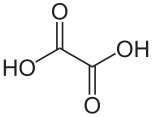
Oxalic acid is an organic acid, which is commonly found in nature. For example.  the sour taste of rhubarb and sorrel derived from Oxalic acidOxalic acid is also naturally occurring in honey.


SAFETY
For combating varroa oxalic acid is used in a very weak solution (3.2%). This solution is only very slightly corrosive. However, one must be extremely careful in contact with the skin as oxalic acid can be absorbed through the skin. Oxalic acid can also be dangerous if  breathing or ingested. Therefore it is not advisable to administer an Oxalic acid drip with a spray bottle.

The drip method gives you control of the oxalic acid.  It is how ever also recommended you use acid-resistant rubber gloves when administered the solution.   When mixing, use gloves, goggles and respirator (dust mask).

RESIDUES IN WAX AND HONEY
An increase in Oxalic acid concentration can be seen in the food stores, but this falls back to normal levels within 8 weeks after treatment.  There are currently no identified increased residues in honey season after application of Oxalic acid the previous winter.

RESISTANCE
There are to date not identified resistance to oxalic acid.  Why Oxalic acid works is not fully known. However, the spread oxalic acid is by body to body contact of the bees in a winter cluster.

WHEN CAN BE TREATED?
Oxalic acid drip does not work on sealed brood, so the treatment must be carried out during periods of as little brood as possible. That is in the "Brood free" period in November / December.  In other countries, there has been a tradition to treat much later. However, one should treat as early as possible so that the damage done by the mites present is minimized.  In the past the best results where found in colonies who had at least one flight day after treatment. However, there are no studies that suggest that this is necessary.

MIXTURE
To Oxalic acid treatment purchased oxalic acid dehydrate, which is a white powder. Oxalic acid di-hydrate is normally sold as oxalic acid.
Oxalic acid Treatment recipe

  • 1 liter of water 
  • 1 kg sugar: 
  • 75 grams of oxalic acid dihydrate. 
This is enough for 55 colonies.  Be careful not to mix small quantities, for example. For just two colonies,  weighing on ordinary kitchen scales can give an incorrect mixture due Kitchen Scales agree inaccuracy.

DURABILITY
Swiss studies have shown that  Oxalic acid treatment can be stored in a basement (under 15 degrees), for up to 6 months.  If the mixture is kept at a higher temperature, the solution will become toxic to bees. We therefore it is recommend using fresh mixes. One should keep the solution in a child-resistant container.


HOW TO USE IT?
Oxalic acid treatment should be lukewarm. Use a 50 ml syringe. Add it slowly  3-3.5 ml per minute, on the bees between the frames. This gives approx. 35 ml per minute. bee colony. This is a very small quantity, so it may be a good idea to first practice with water. It is important not to drip ​​directly on the bees and not just on the top of the frames where the bees will leave it alone.


HOW OFTEN DO YOU TREAT?
Danish and foreign studies have shown that treatment to a bee colony more than once per. Bi-generation, there may be damage to the bees and thus reduction in hive strength. It is therefore recommended to treat a hive only once per. season. However, it is OK to treat again as long as there are several months between treatments. We have beekeepers who treat both fall and spring with oxalic acid.


EFFICIENCY
By common Scandinavian trials and experiments in international cooperation "European Group for Integrated Varroa Control," which DBF has participated, achieved efficiency of over 90% in several studies.


Thursday, August 22, 2013

Bee Cams

I just ran across these two live cams of bees. What a wonderful idea you can sit at home and watch the bees do there thing.   The one from inside the have is grate you can see what they are doing.    I find it very relaxing to watch the bees going in and out of the hive.  They seam very busy today.            


Live streaming video by Ustream


Live streaming video by Ustream

Tuesday, August 20, 2013

2014 Bee keeping Calender - Contest


I just entered that picture in a contest.  If I win the picture will be in the "2014 Bee keeping Calender".  The picture was taken in may at my local bee keeping clubs apiary during one of my first inspections of a hive.   I love the picture because if you zoom in you can see several stages of uncapped brood.    

Wish me luck :)


Greenland Beekeepers


Greenland Beekeepers' Association in Narsarsuaq has received half a million bees.  The purpose of the bees is to make honey for the whole country. It is a consignment of healthy Nordic brown bees from Sweden, says an optimistic beekeeper-chairman.

Southern Greenland has tried beekeeping for 5-10 years. But now, Greenland Beekeepers Association, which was founded last year, has moved up a gear, as spokesman for Greenland Beekeepers' Association,

Ole Guldager says:

- The bees will be used for the production of honey. We have done so for some years, but we would like to produce something more.

It has been attempted twice before putting bees in South Greenland. The first time for approx. 12 years ago, where the bees were fewer and fewer, in the end there was only a few left.

Ole Guldager thinks its had something to do with the Queen. When a queen dies in other countries, you call you to the nearest queen breeder and then you get a new queen in the mail the next day.

It can't be done up here. The beekeepers themselves make the colonies, and if it can not be done, then the families dies.  adds Ole Guldager.

- We simply need have a few more hives in order to build the foundations stock.  We have also distributed the bees to several locations, both in Narsarsuaq  and Arsuk areas.

Therefore, there is now half a million extra bees in Narsarsuaq in total10 families. Ole Guldager hopes to have the number up to 20 in the fall.

The new consignment of bees Nordic brown bees from northern Sweden, is different than the bees that were put out 5 years ago.

- There some pretty good bees for us in Greenland,  they are adapted to a cold climate and should thrive in Greenland.

But because they are a little different than the bees we have at present,  we are in the process of replacing all of our existing queens so that we get the same basic stock of Nordic brown bees.

And there is not much that can go wrong with the new bees, predicts Ole Guldager.  These bees are  disease-free so can not spread anything naturally when they need hollow trees if they are to make hives.

- There are in control.

Ole Guldager hopes that more of Greenlanders will be interested in beekeeping. He believes that you can practice beekeeping virtually the entire west coast up to Disko Bay.

Translated from Hundredetusindvis af bier skal sikre honning til hele landet

JFK the little hive that could....

defend itself with out bee keeper involvement.


JFK was very busy yesterday when I got home.  I had the entrance set to one bee to help them defend the hive after Saturdays robbing incident.  I though this was a sign of robbing again.  After consulting with some people on Beemaster's International Beekeeping Forum Facebook page they though the problem was congestion at the entrance.  I opened it up and a huge mass of bees flew out.   


To me this looks like they are fighting but again the people on Facebook said that with the entrance set to 1 inch or 2 centimeters the bees can defend the hive just fine so its normal to see them fighting a little.   Can't we just get along?


It was almost dark before they started to calm down and all go back inside.  I have feeders in both of the hives and i just ordered some fondant from the bee keeping suppliers.    I ordered 2 boxes 15 kilograms each this should give them enough stores for the winter.  I also heard from my Facebook friends that as long as they both have plenty of food in the hives they wont bother robbing each other.

But I'm still not sure that what i was seeing was robbing.  Apparently with full scale robbing in action there will be hundreds of bees involved.    Maybe I'm just the over worried bee keeper.  

Monday, August 19, 2013

Robbing

Robbing is a term used in beekeeping. Bees from one beehive will try to rob honey from another hive. Robbing behavior is especially strong when there is little nectar in the field. Strong colonies with the largest stores are the most apt to prey upon weaker colonies. Some robbing is carried out so secretly that it escapes notice. Most of the time, when robbing is going on, one can see bees from the opposing hives fight. The fights can lead to significant losses of bees. Robbing may go on between hives in one apiary or hives of different apiaries.

Here we go again.   Sunday morning i added some new sugar syrup to the little hive (JFK).  They are still about a third of the size of the larger hive (Heathrow).  I have been trying to feed them extra to help them build up.   The last time I had robbing problems was when I had the feeders out side the hives.  This time I put the feeder directly inside JFK.   Three hours later all hell broke loose, I guess they could smell it.

There where bees all over the out side of the hive.  I wasn't to worried in the beginning until I saw all the dead little bee body's in the grass in front of JFK.    I opened up the hive and out few a few hundred bees.  They are supposed to be back there, I could also see little bee body's on the bottom of the hive.   I quickly ran in the house grabbed my bee jacket and gloves ran back out again and removed the sugar syrup feeders and reduced the size of the opening to one bee.    I also put a little smoke to the front of the hive seamed to clear them off fast enough.

Dam why do they keep picking on JFK.   Can't they just leave them alone to grow.  Last night I made up two liters of sugar syrup I'm going to put a feeder in each hive this time.   Then maybe Heathrow wont feel so jealous and stay in there own hive.    

I bought 2 new feeders just for this purpose last week.  But when i tested it in JFK I found dead (drowned) bees so I was worried.  I am going to put it back again maybe they just need to learn how to use this type of feeder.   It's the same type they use over at the local bee school so they must be OK.


Wednesday, August 14, 2013

Chalkbrood

Over the weekend i found the bees in the larger of the two hives dragging these things out.   When i smashed it up it looked exactly like chalk.   After Google around i'm convinced its calk brood but what do i do about it?   

I have only been a bee keeper for 2 weeks and already I'm having problems.   Poor girls I need to help them ... some how.


I just spoke with the man in charge of my bee keeping class.  He says because it was only two (so far) that i shouldn't worry to much about it.   What it could be is that the bees are just cleaning house and I should leave them bee to do just that.   Apparently this late in the year the bees will clean out the comb and remove any brood that may be sick or contain drones (!!!).  Poor guys don't even get permission to finish developing this late in the year before they get tossed out.

OK then I'm not going to panic I am going to let the bees be and be bees.    (Sorry for the pun but I couldn't help myself )

Update:  22-8-2013 found another one.  Bee guru's say that its not a problem unless you find like 50 of them but i should probably change out the queen.  

Tuesday, August 13, 2013

Life Cycle of the Honey Bee.

 The queen honey bee lays about 1500 eggs a day.   This is a little explanation of what goes on in the 19 1/2 days after the egg is laid.


Day 1 - 3  the egg
The honey bee worker exists as an egg for the first 3 days of its life.


day 3 the egg hatches into a small larvae.   The honey bee exists as a larvae though 7 1/2 days.

Workers begin feeding the larvae royal jelly you can see it in the bottom of the picture as a puddle.


Larvae ready to be capped. 
Workers begin to cap the cell with in 15 hours of this stage.
Capping has started
Fully capped brood sell.
Within 24 hours of being caped the Larvae spins a cocoon sheds its Larvae skin and becomes a pre-pupa stage.
day 12
day 13
day 14

day 15
day 16 (movement of legs can be seen)
day 17 or 18 movement of mouth parts
19 1/2 days worker honey bee begins to chew its way out.

Here is a a link to a video explains it all along with some info on the Varroa mite:  here


Friday, August 9, 2013

Bee Keeping Week 1


A little update on my first week as a bee keeper.

The Pickup

We picked up the bees on July 31, 2013.   It was a 45 minute drive to the guys house,  as it turns out he lives in the middle of no where.  He was really nice when i asked him how many hives he had he said he didn't know right now.   That surprised me until he started to show us around.   Apparently he captures swarms and just stores them then he sells the hives as they start to lay eggs.  He normally over winters about 45 hives then sells all but 20 in the spring.   A nice little side business when you consider what he can get for them in the spring.   I think i will wait a few years before i try and do that.

He was nice enough to move the frames for me from his hives over to the travel boxes i had borrowed from the local bee club.   We packed the girls in the car and drove home.   I was worried we would end up with bees in the car but it wasn't to bad i think we drove with 3 bees buzzing around the windows in the back of the car.

By the time we got home it was 21:30 but not really dark yet.   He told me to put the hives next to my hives and wait a few days to move them.   Here's where the fun started.   The next day I couldn't wait to get up and go out to check on them then I found myself out checking on them almost every hour.  I had to make sure they where OK.  I didn't open the hives i just watched them going in and out.

Hedge trimming

Sunday we needed to trim the hedge.
You can see the girls in there little hives.  Next to my refurbished trugstader.  Trugstader  are quite common in Denmark they are a mix between a top bar hive and a Langstroth hive.  I will show the difference when i get around to taking some internal pictures of them.    As you can see the Hedge on the right is a bit over grown.   Its an old hedge that used to divide the front of the garden from the back of the garden.  The people that lived in the house before us thought it was a waste having a front garden so they planted the hedge on the left which is now big enough that we don't need the one on the right.    We really do need to just remove the hedge on the right but i'm not exactly sure how to remove a 15 meter long hedge that's almost 3 meters high.   So cut it we did :)

It took about an hour and a half and a really good set of pruning shears.  Lars managed to destroy the hedge trimmer.  I tried to tell him its not designed to do that.  Men never listen.

While trimming the hedge i wasn't more then 20 cm from the bees in there travel hives.   They didn't seem to care at all.   I was wearing shorts and crocs,  crazy i know but it was hot.   The fun thing was i kept feeling something tickling my feet would take of my shoe and a bee would fly out it happened 3 times.   Silly bee stay out of my shoes but thanks for not stinging me :)

The Big Move

Since the girls had been so nice i decided it was time to move them to there new hives.  Suited up put on some gloves and off i went.  I didn't bother with smoke, from what i read it can take them a few days to get over smoke and they are such small bee families i didn't want to set them back any more then i had to.    It didn't take long, not much buzzing in the first hive the second one talked to me a bit.

Observations First hive (the one in the back)
  • 1.5 frames of honey
  • 2 of brood saw some uncapped that wasn't more then a day or two old, and some capped.
  • No sign of the queen 
  • didn't see eggs but i'm bad at spotting eggs.   I blame it on the veil but its probably my glasses.  
Observations Second hive (the one in the fount)
  • 3 frames of honey not all caped though.
  • Saw several stages of uncapped brood.
  • Full frame of capped brood that looks like its starting to emerge.
  • EGGS! i saw eggs.
  • No sign of the queen.

Open Feeding = BAD

I decided to put some sugar water out for the little hive so i built my own little bee feeding system.  I really should have read more about the fact that open feeding can start robbing.


When I got home from work on Monday I was out stalking the bees I mean checking on the bees.   The front hive looked fine bees flying in and out.  Then I walked by the sugar water I had set out to feed them.  They where hungry most was gone good girls eat up.   Then I came to the second smaller hive.  I watched for a few minutes I just love to watch them.   Something seamed different.   I must have watched for 5 minutes I couldn't figure it out.   There where bees at the landing pad trying to keep other bees from coming in.  One even had another by the leg and wouldn't let it go.  Then finally something i read kicked in.   These where guard bees trying to keep the other bees out of the hive.   So i ran into the house to check my books on exactly what robbing looked like.  Went back out to double check yup that's got to be whats going on here. So i blocked up most of the entrance left them about 2 cm checked again about 2 hours later it was mostly dark by then and things looked better.    

OK so no more open feeding the next day i put the little feeding system in the back of the little hive and promptly ordered a real in the hive feeding tray.

I guess that's it from my first week bee keeping.   

Things i have learned this week.

  1. Bees don't mind me trimming the hedge.
  2. I can inspect a hive but really should go slower and take my time looking for queen and eggs.
  3. Open feeding is bad.
  4. I know know what to look for when i see robbing.
  5. Pollen comes in different colors! Who knew i thought it was just yellow.  Nope there is blue pollen.


Tuesday, August 6, 2013

Plants Bees Love


Bees are having a very hard time these days in the winter of 2012/2013 over 20% of the bees in Denmark (Where i live) didn't make it.   There are a lot of reasons why the bees didn't survive the winter it was an exceptionally long and cold winter in Denmark,  the over use of  Neuropeptides pesticides, diseases and urbanization are just a few.    When you consider how much of the food we eat that depends on bee pollination it might be a good idea for us to start helping them out a little.  If you are going to plant flowers in your garden why not think about the creatures that share the garden with you.

The following is a list of flowering plants that bees enjoy and a few of them we enjoy as well.   Some I consider weeds and wont be welcome in my garden but there are a few that i will be planting to help my bees next year.

Flowering in March and April


Crab apple -  Malus sylvestris
Bluebell -  Hyacinthoides non-scripta
Broom - Cytisus scoparius
Cherry - Prunus avium
Bugle - Ajuga reptans
Heather - Erica spp.
Flowering currant - Ribes sanguineum
Lungwort - Pulmonaria officinalis
Pear - Pyrus communis
Goat willow - Salix caprea
Red dead nettle - Lamium purpureum
Rosemary  - Rosmarinus officinalis
White dead nettle  - Lamium album


Flowering in May and June

Birds foot trefoil - Lotus corniculatus
Chives - Allium schoenoprasum
Comfrey - Symphytum officinalis
Foxglove - Digitalis purpurea
Honeysuckle - Lonicera periclymenum
Kidney vetch - Anthyllis vulneraria
Lupin  - Lupinus spp.
White clover  - Trifolium repens
Poppies - Papaver spp.
Raspberries - Rubus idaeus
Red campion - Silene dioica
Sage - Salvia officinalis
Thyme  - Thymus praecox
Tufted vetch - Vicia cracca
Meadow cranesbill - Geranium pratense
Wisteria  - Wisteria sinensis

Flowering in July and August

Borage - Borago officinalis
Bramble - Rubus fruticosus agg.
Buddleia - Buddleia davidii
Cornflower  - Centaurea cyanus
Hollyhock  - Alcea rosea
Common knapweed  - Centaurea nigra
Lavender - Lavandula spp.
Lesser burdock  - Arctium minus
Wild marjoram - Origanum vulgare
Mint - Mentha spp.
Purple loosestrife  - Lythrum salicaria
Red clover - Trifolium pratense
Scabious  - Scabiosa columbaria
Sea holly - Eryngium maritimum
Snap dragons - Antirrhinum majus
Sunflower - Helianthus spp.
Bee bee treeTetradium
Teasel - Dipsacus pilosus
Thistles - Cirsium dissectum
Vipers bugloss  - Echium vulgare


Sunday, August 4, 2013

Bees

I finally picked up my bees on wednesday.  I guess i can now call myself a bee keeper.  Yeah!

I waited until today to move them from the travel hives into mine.  I know i could have done it sooner but i didnt have time.  I have been watching them, some might consider it stalking just to be sure they where ok.  They are my first bees i want to be sure i am doing it right.

They seam to be so gental that i desided to move them without smoke.  The smaller of the to hives where so quiet i almost didnt here them.  I could see some caped and uncaped young but no eggs. Im not all that worried i am not all that good at spoting the eggs they are so small.  No sign of the queen either but she isnt marked yet. The had about a frame and a half of honey. They will need to build up more.

The second hive was bigger.  You could here them but.  I could see eggs here and loads of caped broud.  No queen but where there are eggs there must be a queen. They had 2 full frames of honney wow it weighs a lot.  Not at all worried abiut these guys they seam very strong and happy.

Monday, May 6, 2013

Its to hard to be home on the weekends

We had a very busy couple of days in the garden this weekend.   On Saturday after noon i looked into the bee hives and still couldn't figure out where the ants where coming from.  It occurred to me that they might be in the isolation in the sides of the trugstader.     I called my boyfriend over who agreed that they could be in there.  So after getting a bunch of tools he started to remove the sides to get into the isolation.

    Sure enough there was an ants nest in the bee hive.  I would rather have had a bee family in the bee hives then an ant family.   So they where evicted into a large plastic bag.   Yes we even found the queen she was huge :)

Sunday we where out in the garden all day.  I was lucky that my daughter and her boyfriend where home so i put them to work removing an old lilac bush and a couple of hanging willows.    I suspect it will be a few weeks before they decide to spend the weekend they really worked hard.  It builds character.

    Lars and I sanded the sides of the bee hives in preparation for a new coat of pant.  This morning Lars comes up with the idea that maybe we should just replace the sides of the hives since they where so rotten.   Why couldn't he have said that before we used most of the day yesterday sanding them down.   I don't think i will ever understand men, he is probably right though they are really rotten.

I also managed to do my spring cleaning on the garden shed   I wonder if i will ever start to just throw stuff away instead of just putting it in the shed where i have to then throw it away the following spring.  Potatoes are also in the ground now.   The garlic is looking grate and the strawberry plants are starting to grow.   I just love spring......


Friday, May 3, 2013

Bee keeping Starts

For the last several months i have been doing a lot of reading on bee keeping.   I'm not sure what got me started on this idea maybe it was a video on you-tube maybe it was all the reports on the news about the bee's dying.    I joined the local bee keepers club about a month ago.  The first time i went i didn't expect there to be a lot of people and i expected those that where there to be above retirement age.  I was wrong.  Every time i go to a meeting there's at least 30 of us there.   The ages are spread from around 20 to a very fresh 87.     Everyone is so nice and helpful and they all love bees or honey or both.  

My first experience with the bees was quite fun.  I was worried how i would react to a few thousand bees flying around my head.   I wasn't scared at all i was fascinated they where so gentle.  Until that is one tried to fly in my eye and i wiped it away with my hand with out thinking and got stung right between the eyes.   (yes i looked funny the next few days)


Last weekend I found 2 Trugstader on line cheep.   There was a very kind man who had kept bees for 5 years who due to ill health was selling off all his bee gear.    He sold me everything i needed for the two hives.    Trugstader are popular in Denmark   I will post some pictures of the insides in another post.    I like them mainly because they are made of wood and will look better in my garden then a bunch of plastic boxes stacked on top of each other.

I ordered a bunch of wax frames and a bee jacket and hat.  I don't want to get stuck between the eyes again :)

as a fun side note.  I came home from work the other day and the ants had found the bee hives.   Apparently there is still something good in them.   There was a little army of ants going in and out of one of the hives.   I guess they need a good cleaning and paint job before i get the bees.

Related Posts Plugin for WordPress, Blogger...